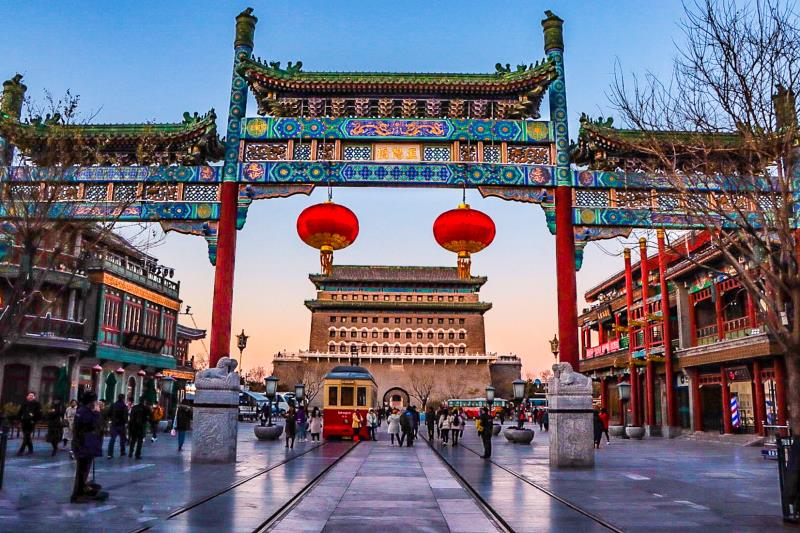
The Zhengyangmen Gate
Introduction
The Zhengyangmen Gate, also known as the Qianmen Gate, is an iconic structure located on the Beijing Central Axis, one of the most significant urban planning achievements in the world. Situated at the southern end of Tian'anmen Square, this gate has stood as a sentinel over Beijing for centuries, symbolizing the city's rich history and cultural heritage. The Zhengyangmen Gate is not only a monument of historical significance but also an architectural marvel that embodies the grandeur of ancient Chinese city planning. The Beijing Central Axis, which stretches 7.8 kilometers from the Bell and Drum Towers in the north to the Yongdingmen Gate in the south, includes the Zhengyangmen Gate as a vital component. This axis represents an ensemble of palaces, public buildings, gardens, and other significant sites that have influenced traditional Chinese urban planning for over two thousand years.
History
The history of the Zhengyangmen Gate is deeply intertwined with the development of the Beijing Central Axis and the city itself. Established in the 13th century and refined in the 16th century, the Central Axis facilitated the organizational layout of old Beijing. The Zhengyangmen Gate has been a critical part of this urban layout, serving as the southern gateway to the city for imperial processions, foreign dignitaries, and common people. Over the centuries, it has witnessed the ebbs and flows of Chinese history, standing resilient against the tides of time. This gate, along with other components of the Central Axis, was recognized for its historical and cultural significance when the Axis was inscribed on the UNESCO World Heritage List. The designation highlighted the Zhengyangmen Gate as part of a larger architectural and cultural narrative that bears testimony to a civilization and tradition that has shaped human history.
Architecture
Design
The architectural design of the Zhengyangmen Gate is a testament to ancient Chinese ingenuity and aesthetics. It reflects the traditional Chinese architectural style that emphasizes symmetry, harmony, and grandeur. The gate, with its imposing height of 43.65 meters, is structured with a watchtower and a barbican, showcasing the strategic military architectural style typical of ancient city gates. The design facilitates both defense and ceremonial functions, with its robust structure and grand scale suited for imperial processions and public ceremonies. The intricate detailing and the layout are representative of Chinese architectural principles that prioritize balance and order, subtly conveying the philosophical ideals of Confucianism integrated into urban planning.
Materials
The construction of the Zhengyangmen Gate utilized materials that were both durable and aesthetically appealing. Traditional Chinese architectural techniques are evident in the use of timber, bricks, and tiles, which were sourced locally and crafted with precision. The woodwork is elaborately carved, showcasing skilled craftsmanship that has withstood the test of time. The bricks and tiles, often glazed for added beauty and protection, contribute to the gate's majestic appearance. The careful selection and use of materials not only ensured the structure's longevity but also its ability to withstand the harsh climatic conditions, making it a symbol of enduring strength and resilience.
Cultural Significance
The Zhengyangmen Gate holds immense cultural significance as a part of Beijing's Central Axis, a monumental achievement in urban planning and architectural design. It serves as a tangible link to China's imperial past, representing the political and cultural heart of the nation. The gate has witnessed countless historical events and has been a backdrop for national celebrations, making it an integral part of China's cultural consciousness. As a symbol of national identity, the Zhengyangmen Gate embodies the ideals of unity, continuity, and cultural heritage that are central to Chinese civilization. Its inclusion in the UNESCO World Heritage List further underscores its value as a cultural treasure, deserving of preservation and appreciation by future generations.
Restoration and Preservation
Efforts to restore and preserve the Zhengyangmen Gate have been part of broader initiatives to protect the Beijing Central Axis and its associated historical sites. Between 2020 and 2023, a comprehensive action plan was implemented, focusing on the renovation of historical buildings, including the Zhengyangmen Gate, alongside archaeological research and environmental improvement. These efforts were aimed at restoring the historical patterns and charm of the axis while enhancing the urban landscape. Ensuring the structural integrity and aesthetic authenticity of the Zhengyangmen Gate has involved meticulous restoration work, emphasizing traditional techniques to maintain its historical value. Public participation and awareness campaigns have been a vital part of these preservation efforts, highlighting the gate's importance as a cultural and historical symbol.
Zhengyangmen in Modern Times
In modern times, the Zhengyangmen Gate continues to serve as a prominent landmark within Beijing's urban landscape. Its historical and cultural significance is celebrated through various initiatives and events, such as the unveiling of the large-scale lacquer painting titled "Eternal Central Axis" at the gate. This event, which marked the inclusion of the Beijing Central Axis on the UNESCO World Heritage List, highlighted the gate's enduring relevance in contemporary culture. Additionally, the gate is featured in modern media, such as documentaries like "Flavor of Beijing," which explore the city's history and development through unique perspectives. As a focal point for cultural tourism and a symbol of Beijing's rich heritage, the Zhengyangmen Gate remains a vital part of the city's identity, bridging the past and present.








